
Chuan Park Developer’s Partnership With Government Agencies Boosts Political Support For Integrated Transport Hubs
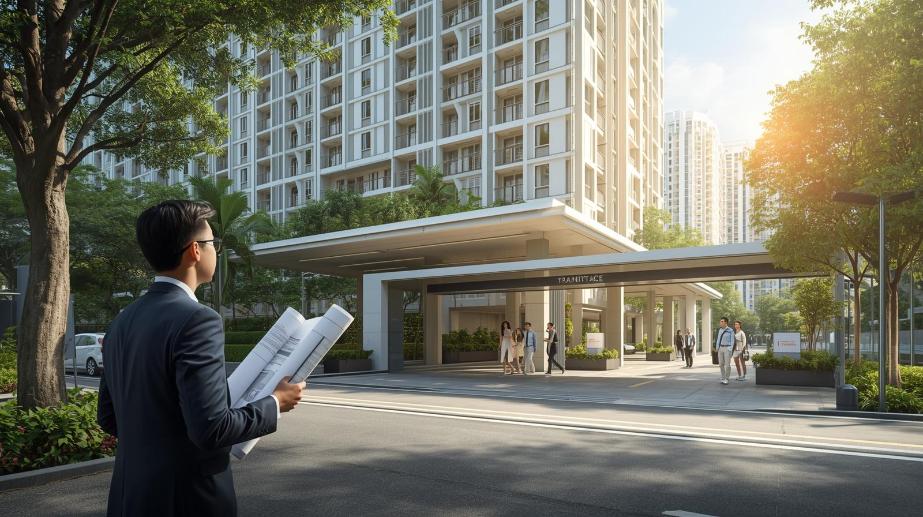
The premier Chuan Park developer, Kingsford Development, is clearly collaborating with government authorities to strengthen advocacy and support for integrated transport hubs, demonstrating the innovation of urban advancement.
This collaboration between the private sector and the public as a provider of services is aimed at improving the flow of transport and, in turn, raising the level of convenience, even in the smallest aspects of daily life.
As the systems of transportation become more integrated, the need for well-coordinated development around major transport hubs becomes more apparent.
Support for Transit-Oriented Living
Chuan Park’s proximity to existing transport infrastructure (i.e., rail and bus systems) illustrates the potential of residential developments to support transport initiatives; (in the case of Chuan Park, the initiatives are long-term).
One of the primary justifications for public transit-oriented development is that it promotes the use of public transport while reducing the number of private cars on the road, thus achieving a target that contributes to environmental sustainability.
Consequently, when large residential developments are constructed in locations that optimize access to the transport network, they exemplify the integration of land use and transport planning as a single system instead of disparate components.
The advocates for further public funding for integrated hubs defining the convergences of train and bus services and pedestrian and cycling routes will be strengthened by this type of planning.
Legislators and planners point to successful residential integration along transport corridors as the evidence of positive social returns for transport investments.
To a very large extent, the positive social benefits that advocates of transport investment highlight are always increased access to jobs, support to businesses in the area, increased overall accessibility to services, and a better quality of life.
These outcomes certainly improve the quality of social debates regarding transport investments and planning.
Integrated Hubs As A Governance Priority
The integration of transport hubs is a cornerstone of Singapore’s urban policy.
Planning for transport integration involves the elimination of barriers for easy transfers, as well as the provision of sheltered, accessible routes that enable easy transfers between modes of transport and between residential or commercial areas and shift the location of those areas.
Their success is not determined by engineering and design alone but also by the planning of surrounding land uses. When private residential developments accomplish these aims, they reinforce public policy objectives.
Public sector planners and policy-makers can show that transport infrastructure improvements stimulate private sector investments, and developers realize the benefits of increased accessibility and the expansion of growth potential of the area in the future.
This cycle of investment reinforces the political will to extend and improve rail services, the level of bus service interchanges, and to create integrated land use opportunities along public transport systems.
ALSO READ: The Influence of Political Events on CFD Trading Strategies
Public-Private Alignment Encourages Broad Support
Positive interactions between developers and regulators shape public attitudes. Transport projects are more likely to attract support from residents when they realize lifestyle improvements brought about by shorter journey times, new places to walk, and new integrated amenities.
Communities that are well-connected exemplify beneficial policies in practice and translate the intangible into everyday benefits. Urban planners view these partnerships as models of sustainable city building.
By aligning design standards, traffic control, and levels of land use, they ensure that the operation of transport infrastructure is complemented by the retention of a desirable and affordable neighborhood.
Looking Ahead
The interaction between housing growth and transport policy will continue to be a critical area of public focus as cities expand.
Integrated planning methods that combine housing growth with expanded mobility systems provide an approach that prioritizes and balances expansion with accessibility, resilience, and the collective well-being of communities.