
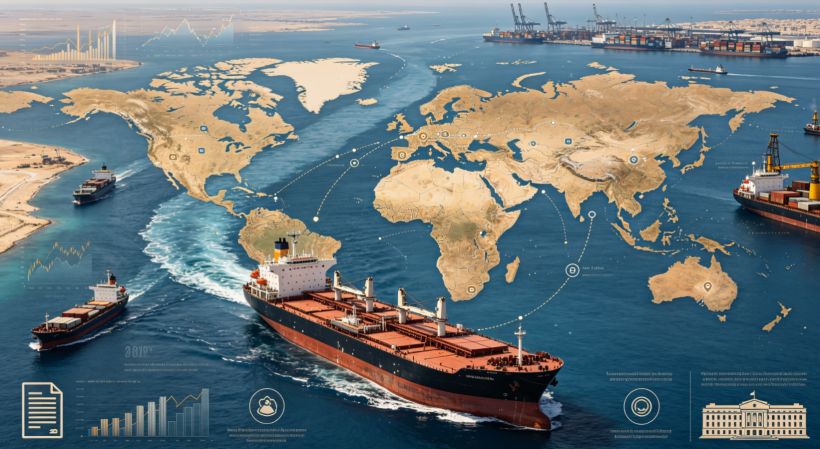
Roughly one-fifth of the world’s petroleum liquids consumption passes through the Strait of Hormuz, making it one of the most strategically important maritime routes on the planet. Data from U.S. Energy Information Administration (EIA) shows that millions of barrels of crude oil and petroleum products move through this narrow waterway every day. Because so much global trade depends on this corridor, even temporary disruptions can quickly affect energy prices, business confidence, and government policy around the world.
The importance of the Strait extends far beyond regional politics because it plays a central role in global energy security. Research from the International Energy Agency (IEA) shows that countries across Asia, Europe, and other regions rely heavily on energy supplies transported through these waters. As a result, investors, policymakers, and financial markets closely monitor developments whenever diplomatic tensions or military incidents raise concerns about shipping safety.
Why This Shipping Route Matters
The Strait of Hormuz connects the Persian Gulf with the Gulf of Oman and the Arabian Sea. Major energy exporters, including Saudi Arabia, Iraq, Kuwait, the United Arab Emirates, and Qatar, depend on this route to deliver oil and liquefied natural gas to international buyers. Reports from the U.S. Energy Information Administration (EIA) indicate that there are limited alternative export routes capable of handling similar volumes if the passage becomes restricted.
Even without a complete closure, uncertainty alone can influence commodity markets. Energy traders often respond to geopolitical risks by adjusting prices to reflect the possibility of supply interruptions. These price movements can spread through financial markets within hours.
Economic Effects Reach Far Beyond Oil
Higher energy prices affect much more than fuel costs. Findings from the International Monetary Fund (IMF) suggest that sustained increases in oil prices contribute to inflation by raising transportation, manufacturing, and logistics expenses. Businesses frequently pass these additional costs to consumers, making everyday goods and services more expensive.
Central banks also monitor these developments closely. Rising inflation may influence decisions on interest rates, borrowing costs, and broader monetary policy. Governments may introduce temporary fuel subsidies, adjust budgets, or strengthen strategic petroleum reserves to reduce the impact of market volatility.
Diplomatic and Security Implications
The Strait of Hormuz remains a priority in international diplomacy because stable shipping benefits both exporting and importing nations. Experts note that multinational naval patrols, diplomatic negotiations, and regional partnerships are often designed to reduce the risk of disruptions while maintaining freedom of navigation.
Reports from the United Nations Conference on Trade and Development (UNCTAD) emphasize that secure maritime trade supports global commerce by allowing goods and energy supplies to move efficiently across international markets. Any increase in shipping risk can raise insurance premiums and transportation costs, affecting industries well beyond the energy sector.
How Governments Prepare for Future Risks
Many countries have expanded efforts to diversify energy sources and reduce dependence on individual shipping routes. Studies published by the International Renewable Energy Agency (IRENA) highlight continued investment in renewable energy, while governments also develop additional pipelines, storage facilities, and alternative supply chains.
Businesses are adopting similar strategies. Large manufacturers, shipping companies, and commodity traders increasingly evaluate geopolitical risks when planning inventory levels, sourcing materials, and managing long-term contracts. These preparations help improve resilience during periods of uncertainty.
Looking Ahead
The Strait of Hormuz continues to influence economic and political decisions because it connects major energy producers with global markets. Its importance extends from financial trading floors to government ministries and household budgets. While investments in renewable energy and diversified transport networks may gradually reduce dependence on a single corridor, this maritime passage is expected to remain a critical part of international commerce for years to come. Careful diplomacy, reliable trade routes, and long-term energy planning will continue to shape how countries respond whenever tensions arise in this strategically significant region.